
About Dermatology provides basic and advanced skin surgery in a safe and comfortable environment. With our highly experienced dermatologic surgeon, together with state of the art surgical techniques and equipment, you can be assured that you are in good hands.
Mohs Micrographic Surgery
What is Mohs micrographic surgery?
Mohs micrographic surgery is a precise form of surgery to remove certain skin cancers. Also known as Mohs surgery, it is named after the doctor who came up with it. During Mohs surgery, thin layers of cancer containing skin are removed in stages until only cancer-free skin remains. The aim of Mohs surgery is to remove all the skin cancer while minimising removal and damage of surrounding healthy tissue.
Why did the doctor offer me Mohs surgery?
Mohs surgery is used to treat most common skin cancers, basal cell carcinoma and squamous cell carcinoma, as well as some other skin cancers. Your doctor may have recommended Mohs surgery for the following reason/s
- Tumour has returned or has a high risk of returning
- Tumour was removed incompletely
- Tumour is located in a location where you want to preserve as much healthy skin as possible such as the eyelid, nose, ear or lip
- Tumour edge is not well defined or large in size
- Aggressive type of tumour
Why should I have Mohs surgery?
Mohs surgery increases the chance of cure and reduces the need for additional surgery or treatments. The ability to ‘see where the cancer is going’ gives Mohs surgery important advantages.
1) Mohs surgery has a high cure rate
2) Mohs surgery allows you to keep as much healthy skin as possible because the surgeon only removes the skin with cancer cells. This is especially important when skin cancer develops in an area with little tissue beneath (e.g. eyelid, ear or lip)
What happens during Mohs surgery?
The surgery is carried out under local anaesthesia. This anaesthetic only numbs the area of surgery and you will remain awake. If you are very anxious, we can give you a mild sedative. Your surgeon will first remove the visible tumour followed by a thin margin of surrounding skin. You are then bandaged so that you can wait in comfort in the waiting area. This tissue is then examined under a microscope while you are still in the clinic. If it contains cancer cells, another layer of tissue is removed and examined. Further layers of tissue that contain cancerous cells are removed, one layer at a time, until all the cancer cells have been removed. The local anaesthetic lasts for about 2 hours and can be topped up if needed.
After the tumour has been removed, there are several options for repairing the wound. These will be discussed with you before your surgery. Some options include
- Reconstruction and closure by the Mohs surgeon
- Dressed and then repaired by a plastic surgeon
- Leaving to heal on its own
How can I prepare for my surgery?
- Do cut down or stop smoking as many days before your Mohs surgery as possible.
One week before surgery
- Do check if you need to stop any of your regular medication or supplements.
On the day of the surgery
- Do shower and wash your hair before the surgery.
- Do have your breakfast before coming down.
- Do take your regular medication, especially hypertension (high blood pressure) medication before coming down to the clinic. You may have been instructed to stop certain medication, do not take these.
- Don’t put on makeup or jewellery.
- Don’t drive to the clinic.
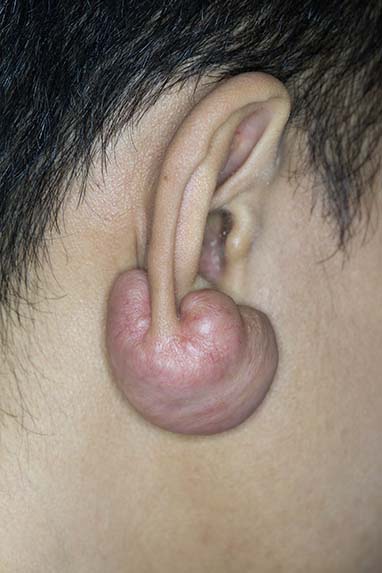
Keloids
How can keloids be treated?
The goals in treating keloids are to
1) Reduce pain and itch
2) Flatten and lighten the lesion so that it is more like the surrounding skin
The most common types of treatment include
1) Injection of steroid into the keloid
2) Laser therapy
3) Cryotherapy
4) Silicone sheets and gel
5) Surgical excision
6) Radiotherapy
Is surgery possible for my keloid?
Surgical excision can be useful in some patients, such as in patients with ear keloids. Although surgical removal of keloids has high recurrence rates, proper surgical technique and the use of post-operative therapies can help to reduce the recurrence rate.
Birthmarks
What are some birthmarks that can benefit from surgery?
Congenital moles
A mole can appear on the skin as a small spot or cover a large area of skin. Moles come in many colors, but most are brown or tan. When a person is born with a mole, the mole is called a congenital mole. These moles vary in size from small to giant. Having a giant congenital mole increases a person’s risk of developing melanoma.
A person with multiple congenital moles or giant congenital moles needs regular skin examination to check the moles. Some of the moles may be removed for examination if needed.
Naevus sebaceous
Naevus sebaceous is a birthmark most often found on the scalp, but may also occur on the face, neck or forehead. It appears as a hairless patch at birth or in infancy. It becomes more pronounced around adolescence, appearing yellowish, bumpy or warty. Sometimes, a skin tumour or skin cancer can arise within a naevus sebaceous.
Lumps and Bumps
What are some common causes of lumps under the skin?
Cyst
Cysts are discrete firm bumps that can be felt under the skin. Different parts of the skin can give rise to different types of cysts. For example, the most common type of skin cyst is the epidermal cyst that arises from the hair follicle. They can vary in size from a few millimetres to over ten centimetres. Most cysts are benign and harmless. However, they can sometimes become infected causing intense pain, redness and even discharge pus.
To reduce the chance of inflammation and infection, avoid squeezing the cyst. If your cyst is on a clothed part of the body, avoid tight clothing that may rub on it, e.g. jeans or tights. Cysts that are inflammed or growing need medical treatment.
Lipoma
Lipomas are soft mobile lumps felt under the skin. They are benign fat tumours that can appear at any part of the body. Most people have only one or two lipomas, but some may have many. In these people, a family member may similarly have multiple lipomas. Lipomas that are large, growing or symptomatic need medical attention.
Mole Removal
Why do we need to remove moles?
Sometimes, your dermatologist may advise a mole to be removed and examined microscopically if it appears abnormal. Mole removal can also be for ‘cosmetic’ reasons. In these cases, moles which are benign and harmless are removed for non-medical reasons. Surgical excision of moles can be performed for both medical and non-medical reasons.
What can I expect during surgical removal of moles?
An anaesthetic injection will first be given around the mole. Anaesthetic cream can also be applied prior to the injection for added comfort. You will remain awake throughout the procedure but will not feel any pain. The surgical excision may take approximately ten to thirty minutes depending on the size of the mole.
Nail Biopsy
Why do I need a nail biopsy?
A nail biopsy is performed to help in the diagnosis of nail disorders. It is most commonly carried out when the dermatologist needs to diagnose a skin tumour or cancer under the nail. For example, nail matrix biopsy may be necessary if someone has a dark and wide linear band on the nail.
What treatments are available for in-grown toenail?
If the condition is mild, simple measures like application of topical medication, avoidance of tight footwear and proper nail trimming may be sufficient. For patients who do not improve despite these measures, surgery may be necessary. The procedure is performed under local anaesthetic. The area is first cleaned thoroughly. Following which, the problematic portion of the nail is removed. Laser treatment is then carried out to reduce the risk of the ingrown toenail returning.
What are the different ways of removing my abnormal nail?
The medical term for removing nails is nail avulsion. There are 2 types of nail avulsion, medical and surgical. Some common reasons for nail avulsion include abnormally thickened nails, fungal infection nails and ingrown toenails.
Medical nail avulsion is the removal of a nail by dissolving it with chemicals. It is a safe and painless process that usually takes a week to complete.
Surgical nail avulsion involves the removal of the nail under local anaesthetic. It is a simple and safe procedure for quick removal of the abnormal nail.
Skin Biopsy
Why do I need a skin biopsy?
A skin biopsy may sometimes be necessary to evaluate the cause of a skin rash. At other times, skin biopsies are used to confirm the type of skin tumour or skin cancer.
Skin biopsies are safe, pain-free and fast procedures. Before the skin biopsy, an anaesthetic injection will be given to allow a painless procedure. A small sample of skin is then obtained either with a punch biopsy equipment or scalpel blade. Sometimes, stitches may be necessary to achieve faster healing after the biopsy. Skin biopsies usually take between 10-20 minutes depending on the size of lesion and number of areas to be biopsied.
How do I prepare for a skin biopsy?
Skin biopsies are fast and simple procedures and no special preparation is needed usually. It will be good to shower and wash your hair before attending a skin biopsy if possible. On the day of the biopsy, take all your medication as usual, unless instructed otherwise.
Skin Cancer Surgery
Why do I need surgery for my skin cancer?
Surgery is the most effective treatment for most skin cancers, including basal cell carcinoma, squamous cell carcinoma and melanoma. This means that most patients are cured of that skin cancer after surgery. There are several different forms of surgery for skin cancer. Your dermatologist will propose the best treatment plan after a detailed consultation and examination.
Excision
This is the most common type of surgery performed for treatment of skin cancers. The skin specimen will be sent for microscopic analysis to ensure that the cancer has been completely removed after the excision.
Mohs micrographic surgery
This is a highly effective form of surgery for removing skin cancers such as basal cell carcinomas and squamous cell carcinomas. Mohs micrographic surgery is usually performed for skin cancers on the head and neck, and other critical areas like the fingers or genitals.
Curettage and cautery
Curettage and cautery may be suitable for some forms of superficial skin cancers and precancerous skin growths. During this procedure, the lesion is first scraped off, following which the base is cauterized with electrosurgery. This helps to destroy any remaining cancer cells and stops bleeding.